Tag: Yogi Adityanath

  • Startup Revolution in UP: Youth Embrace Innovation Beyond Traditional Businesses

    Startup Revolution in UP: Youth Embrace Innovation Beyond Traditional Businesses

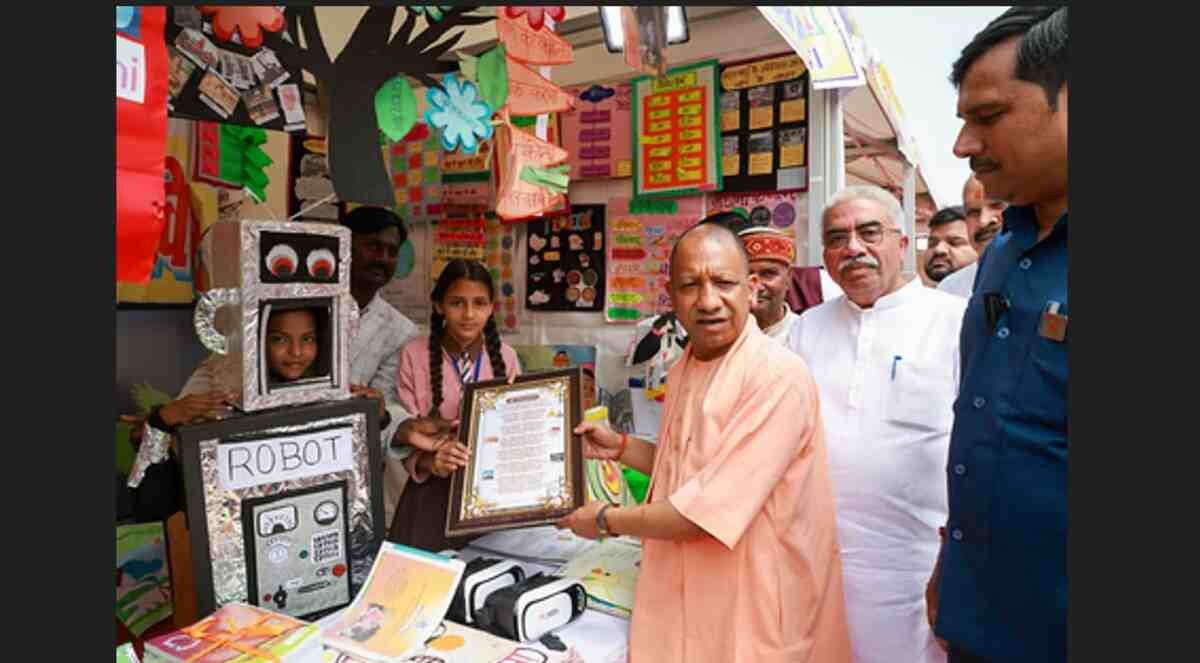
    Delhi, April 10: Uttar Pradesh is witnessing a remarkable surge in youth-driven entrepreneurship, fueled by the ‘CM Yuva’ scheme under the leadership of Chief Minister Yogi Adityanath. The initiative is transforming the state’s economic landscape by encouraging young individuals to move beyond job-seeking and become job creators through innovation-led start-ups.

    ‘CM Yuva’ Scheme Empowers Self-Reliant Youth

    The ‘CM Yuva’ initiative has emerged as a powerful platform for fostering self-reliance among the youth. With over 10,000 innovative enterprises already established, the scheme reflects a growing entrepreneurial spirit across the state. These ventures are not only generating employment but also contributing to the broader vision of building a self-sustained economy.

    Innovation at the Core of Growth

    According to Sarveshwar Shukla, Nodal Officer of ‘CM Yuva’ and Joint Commissioner Industries, the scheme is playing a crucial role in advancing the vision of Atmanirbhar Bharat. He highlighted that nearly 10% of the enterprises under the initiative are based on innovative models, with a target to increase this share to 25% in the financial year 2026–27.

    This shift signals a growing inclination among youth to explore modern, technology-driven, and scalable business ideas rather than relying solely on traditional sectors.

    Popular Business Sectors Among Youth

    Sector-wise data reveals diverse entrepreneurial interests among young individuals. Food and restaurant businesses lead the chart with 763 enterprises, making it the most preferred sector.

    Other prominent sectors include:

    • Computer training: 370 enterprises
    • Pathology sampling: 260 enterprises
    • Fast food ventures: 253 enterprises
    • Franchise-based businesses: 253 enterprises
    • Online teaching: 189 enterprises

    Emerging Sectors Gaining Momentum

    In addition to conventional choices, several emerging sectors are witnessing rapid growth, indicating a shift toward modern business trends. These include:

    • Gyms and fitness centers: 170 enterprises
    • Mobile IT and digital platforms: 120 enterprises
    • Travel and tourism: 117 enterprises
    • Cloud kitchens: 117 enterprises

    This diversification highlights the adaptability of youth in embracing new-age opportunities.

    Districts Leading the Start-Up Movement

    Entrepreneurial activity is widespread across Uttar Pradesh, with several districts showing impressive performance.

    • Lucknow tops the list with 287 enterprises
    • Azamgarh follows closely with 286 enterprises
    • Hardoi ranks third with 262 enterprises

    Other notable contributors include:

    • Jaunpur (~250 enterprises)
    • Ambedkar Nagar (241)
    • Kanpur (236)
    • Varanasi (229)
    • Raebareli (225)
    • Bareilly (208)
    • Firozabad (197)

    These figures underline the widespread impact of the scheme in strengthening the state’s start-up ecosystem.

    Banking Support Accelerates Growth

    Financial institutions have played a pivotal role in nurturing these start-ups by providing essential funding support. Uttar Pradesh Gramin Bank leads with 2,133 loans extended to innovative enterprises.

    Other major contributors include:

    • State Bank of India – 1,549 loans
    • Bank of Baroda – 1,170 loans
    • Punjab National Bank – 1,018 loans
    • Bank of India – 774 loans
    • Central Bank of India – 589 loans
    • Canara Bank – 585 loans
    • Indian Bank – 573 loans
    • Union Bank of India – 399 loans
    • UCO Bank – 182 loans

    A New Era of Entrepreneurship

    The ‘CM Yuva’ scheme has given a significant push to the start-up culture in Uttar Pradesh, enabling youth to explore innovative ideas and build sustainable businesses. With strong government backing, financial support, and rising entrepreneurial confidence, the state is steadily emerging as a hub of youth-led innovation and economic growth.
  • UP’s Road Safety Progress: Minister Dayashankar Singh on Helmet Enforcement & Tech

    UP’s Road Safety Progress: Minister Dayashankar Singh on Helmet Enforcement & Tech

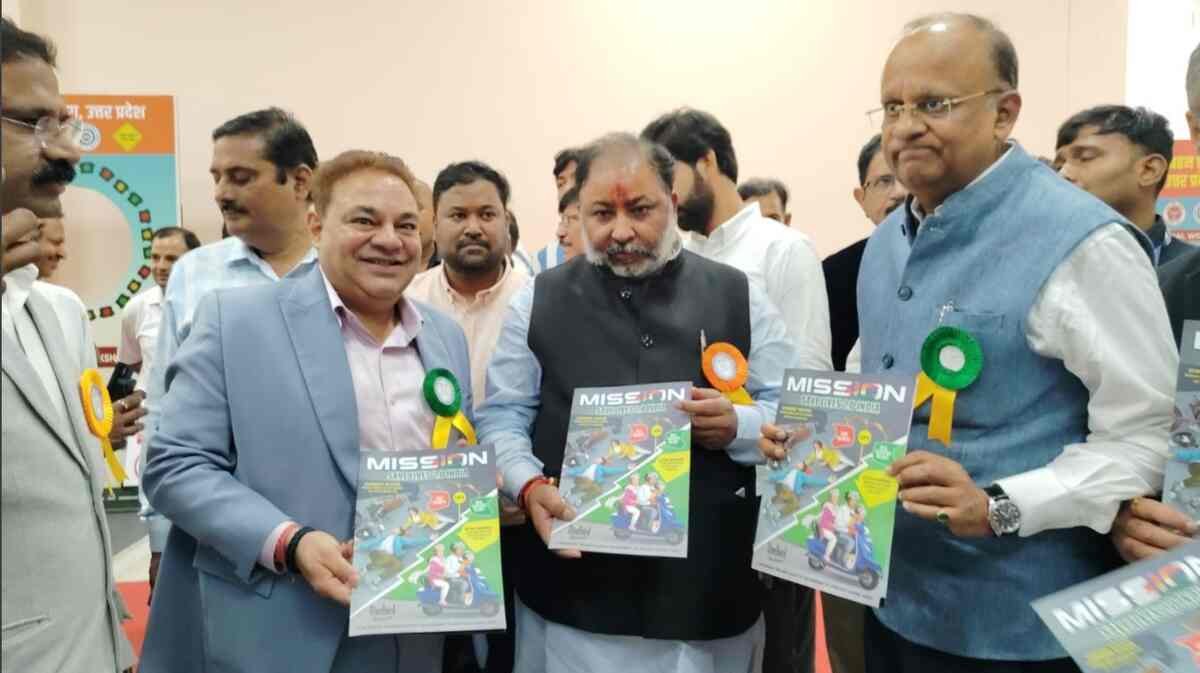
    New Delhi, July 02, 2025: The 25th National Workshop on Road Safety & Best Practices kicked off in the national capital with a resounding call to action—ensuring safer roads through policy, awareness, enforcement, and innovation. Jointly organized by the All India Federation of Motor Vehicle Department Technical Executive Officers Association and the Transport Regional Inspectors Service Association, this two-day event brought together key stakeholders from government, industry, and civil society.

    Hon’ble Transport Minister Dayashankar Singh Highlights Progress in Uttar Pradesh

    Inaugurating the workshop, Hon’ble Transport Minister of Uttar Pradesh, Shri Dayashankar Singh, emphasized the significant progress his state is making in road safety, despite resource limitations.

    “Uttar Pradesh is making great strides toward road safety. Our initiatives focus on critical areas such as vehicle fitness and child awareness programs. With limited resources, we are achieving measurable impact,” he said.

    He further reiterated that the state government, under the leadership of Hon’ble Chief Minister Yogi Adityanath, is working in sync with the Hon’ble Prime Minister’s vision for a Viksit Bharat by 2047, where road safety will play a pivotal role in sustainable development.

    Road Safety is a Humanitarian Imperative, Not Just a Statistic: Transport Commissioner Brijesh Narayan Singh

    Transport Commissioner Shri Brijesh Narayan Singh delivered a thought-provoking message on the importance of approaching road safety from a humanitarian perspective.

    “The Chief Minister’s target to reduce accident fatalities by 50% is not just an administrative benchmark—it is a moral and humanitarian goal. Road safety is about protecting lives, not just managing numbers,” he stated.

    He outlined the ‘Vision 2030 Roadmap’ developed by the Uttar Pradesh Government, which rests on four key pillars: Education, Engineering, Enforcement, and Emergency Response. This strategic framework is being implemented across the state with missionary zeal.

    Counterfeit Helmets are a National Threat: Steelbird MD Rajeev Kapur Calls for Technological & Regulatory Overhaul

    Delivering a compelling industry perspective, Mr. Rajeev Kapur, Managing Director of Steelbird Helmets and President of the 2-Wheeler Helmet Manufacturers Association of India, spoke about the critical role helmets play in road safety—and the alarming rise of counterfeit products in the market.

    “At Steelbird, we are committed to road safety through our ‘Mission Save Lives’ campaign, launched in partnership with the UN and WHO. Our goal is clear: to prevent fatalities caused by the non-use or misuse of helmets.”

    Mr. Kapur stressed the need for strict enforcement to curb reckless behaviors such as red-light jumping, drunk driving, and speeding, which continue to plague Indian roads.

    India Faces a Helmet Crisis

    Citing national statistics, Mr. Kapur revealed:

    • 1.72 lakh road fatalities and 4.63 lakh injuries occurred in 2023.

    • Two-wheeler riders accounted for 44.8% of all fatalities (~77,000 deaths).

    • Approximately 54,000 deaths were directly linked to non-use of helmets.

    • Pedestrians contributed to 20% of total fatalities (~35,000 deaths).

    • Collectively, two-wheeler users and pedestrians make up 65% of road accident deaths.

    “India is facing a massive helmet shortage. 50% of helmets sold today are counterfeit and unsafe. We need a fourfold increase in production—this means investing ₹6,000 crore, acquiring 2 crore sq. ft. of manufacturing space, and employing 80,000 workers,” he said.

    ‘Mission Save Lives 2.0’: A National Movement for Helmet Safety

    Mr. Kapur unveiled ‘Mission Save Lives 2.0’, an upgraded national campaign designed to ensure BIS-certified helmets are:

    • Accessible

    • Affordable

    • Mandatory for all riders, pillion passengers, and children

    This new phase calls for a phased implementation:

    • Tier 1 cities by 2028

    • Tier 2 cities by 2029

    • Tier 3 cities and rural India by January 2031

    The mission also proposes:

    • Mandatory BIS-certified helmet supply with every two-wheeler sold—1 helmet immediately, 2 helmets (rider + pillion) effective January 2027.

    • Real-time BIS license verification, audits, targeted raids, and legal enforcement to dismantle the counterfeit ecosystem.

    • A mandate for all manufacturers to maintain a fully equipped, in-house BIS-approved testing lab for quality assurance.

    • Reduction in GST on helmets from 18% to 12%, and reclassification as essential, life-saving equipment, not luxury items.

    Call to Action: From Policy to the Streets

    Mr. Kapur made a heartfelt plea for stronger public-private cooperation and urged government departments to prioritize helmet safety.

    “A real helmet takes just seconds to wear—but it can save a lifetime. We owe it to every two-wheeler rider and their families to create safer roads,” he said.

    Workshop Draws Participation from Across India

    The workshop witnessed the participation of Regional Inspectors (RIs) and Motor Vehicle Inspectors (MVIs) from major states including Uttar Pradesh, Maharashtra, Madhya Pradesh, Bihar, and West Bengal. Technical discussions revolved around:

    • Innovations in vehicle inspection technology

    • Best practices in enforcement and licensing

    • Using AI and data analytics to prevent road crashes

    • Collaborative strategies to build a national culture of safety

    Conclusion: From Vision to Action

    The 25th National Workshop on Road Safety & Best Practices offered a comprehensive look at India’s ongoing efforts to reduce road fatalities. It underscored that the journey towards safer roads is not only the responsibility of the government but of every stakeholder—administrators, manufacturers, inspectors, and citizens alike.

    With Uttar Pradesh demonstrating determination despite constraints, and initiatives like Mission Save Lives 2.0 setting bold national goals, India is poised to make its roads significantly safer by 2030.