Tag: WSDS 2026

  • WSDS 2026 Concludes with Climate Blueprint as TERI Calls for Accountability and Action

    WSDS 2026 Concludes with Climate Blueprint as TERI Calls for Accountability and Action

    Valedictory Session Unites Government, UN, Industry, and Youth for a Shared Climate Agenda

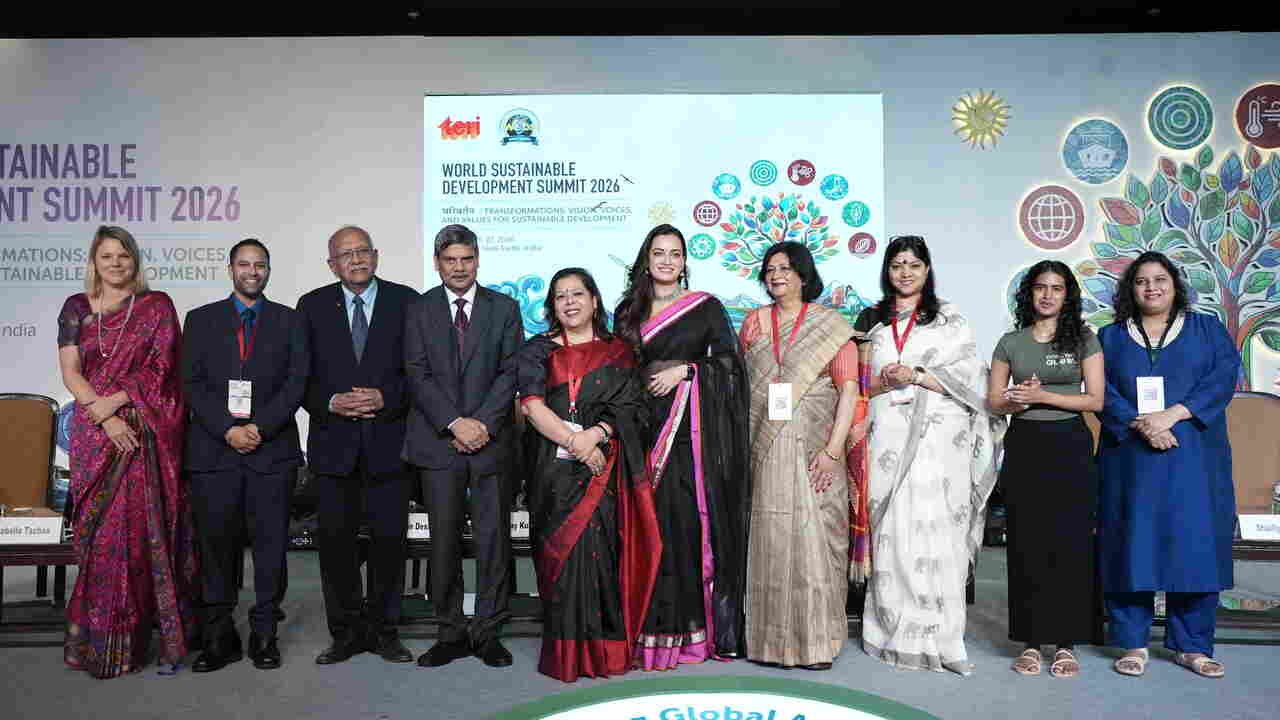
    New Delhi : The final day of the World Sustainable Development Summit 2026 (WSDS 2026), organised by The Energy and Resources Institute (TERI), concluded with renewed commitment and collective resolve. The Valedictory Session, titled “Reflections, Resurgence, and Resolve for Our Common Future,” brought together leaders from government, multilateral institutions, industry, academia, and civil society at the iconic Durbar Hall.

    The closing session reinforced WSDS as more than a convening platform — it emerged as a catalyst for accountable, implementation-driven climate action during what many termed the defining “climate decade.”


    India’s Climate Path: Growth with Responsibility

    Mr Tanmay Kumar, Secretary, Ministry of Environment, Forest and Climate Change (MoEFCC), Government of India, emphasized that climate change now intersects with development, governance, and national security.

    He highlighted India’s science-based, equity-driven model — balancing economic growth, poverty eradication, urbanisation, industrialisation, and decarbonisation simultaneously. With per capita emissions at approximately 2 tonnes annually, India has surpassed its 2030 target of 50% non-fossil installed power capacity five years ahead of schedule, reaching over 51% in June 2025.

    “Clean energy is not charity,” he noted. “It is competitiveness driven by economics.”


    Climate Justice, Gender, and Youth Leadership Take Centre Stage

    Ms Dia Mirza, Goodwill Ambassador at the United Nations Environment Programme, underlined that climate change disproportionately impacts women and girls, despite their central role in food systems and community resilience. Sustainability, she stressed, is now foundational to survival, dignity, and peace.

    Ms Isabelle Tschan, Deputy Resident Representative at the United Nations Development Programme, highlighted India’s demographic advantage, with nearly 65% of its population under 35. She announced collaboration between UNDP, MoEFCC, and TERI to launch the Mission LiFE Youth Ambassadors programme, placing youth leadership at the heart of sustainability practice.


    Development and Climate: A Unified Economic Agenda

    Ms Vaishali Nigam Sinha, Co-Founder & Chairperson (Sustainability), ReNew, asserted that development and climate action are no longer parallel agendas but one unified economic imperative.

    “The global South is no longer asking for permission; it is offering solutions,” she said, adding that implementation between summits defines true progress.

    Dr Ash Pachauri of the POP (Protect Our Planet) Movement reflected on 25 years of WSDS, calling the milestone both a celebration of legacy and a reminder of shared responsibility for the future.


    From Individual Action to Global Movement

    Ms Prachi Shevgaonkar, Founder of Cool The Globe, shared her journey from a concerned student to leading a global citizen-driven sustainability initiative active in over 150 countries — demonstrating how small, daily climate actions can scale into collective transformation.

    Mr Nitin Desai, Chairman, TERI, reiterated that sustainable development demands collaborative learning across governments, businesses, researchers, and communities.

    Dr Vibha Dhawan, Director General, TERI, stressed that partnerships are no longer optional but essential in a resource-constrained world.

    Dr Shailly Kedia, Curator of WSDS and Director at TERI, highlighted record participation at WSDS 2026, with 2,381 delegates, 10 plenaries, 14 thematic tracks, and the defining Him-CONNECT segment focusing on Himalayan resilience and innovation.


    Key Launches: Knowledge, Youth, and Action

    The Valedictory Session featured several significant launches:

    • The 18th edition of Vasundhara – “Climate Capital”, the student-led sustainability magazine of TERI School of Advanced Studies.
    • The Act4Earth Manifesto, outlining collective climate commitments emerging from the Summit.
    • The launch of The Politics of Sustainable Development authored by Mr Nitin Desai.
    • Presentation of the WSDS 2026 Summit Report by Dr Shailly Kedia, summarising key outcomes from three days of deliberations.

    Parallel to the session, TerraZone — WSDS’s sustainability expo — showcased innovations across clean technology, circular economy models, and nature-based solutions. Him-CONNECT, curated by MoEFCC, brought Himalayan ecosystems and community-led resilience into the global sustainability narrative.


    A Mandate for the Climate Decade

    As WSDS 2026 drew to a close, one message resonated clearly: the climate decade demands convergence — of finance and fairness, ambition and accountability, innovation and inclusion.

    With strengthened partnerships and renewed resolve, WSDS reaffirmed its position as a global platform advancing transformative climate action for people, planet, and prosperity.
  • Multilateralism, Climate Action at the Core: World Leaders, Ministers, South Asian Voices Converge at WSDS 2026

    Multilateralism, Climate Action at the Core: World Leaders, Ministers, South Asian Voices Converge at WSDS 2026

    From Himalayan coalitions to green manufacturing and future-ready technologies, global leaders at WSDS 2026 call for transformative, inclusive climate action

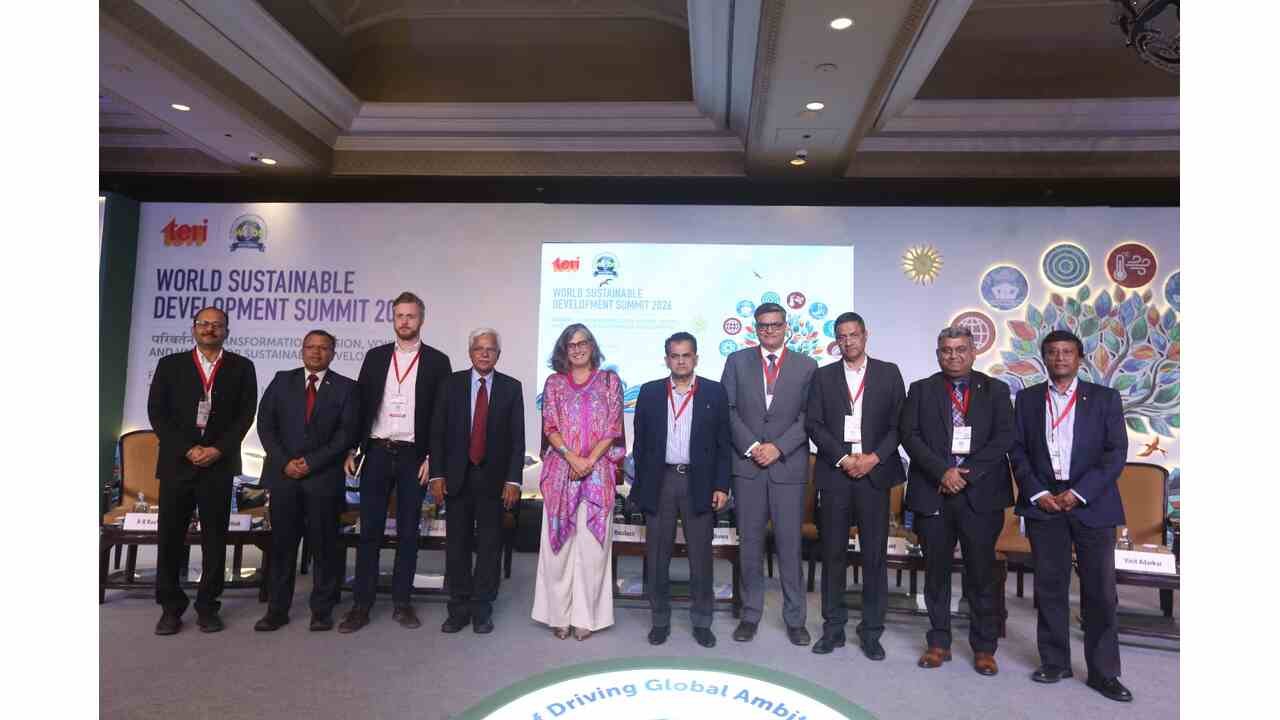
    New Delhi, 27 February 2026: Day 2 of the 25th edition of the World Sustainable Development Summit (WSDS) 2026, organized by The Energy and Resources Institute (TERI), advanced the global conversation on sustainability by spotlighting nature-positive development, green industrial transformation, future technologies, and renewed multilateral cooperation.

    During a high-level plenary, Shri Sarbananda Sonowal, Minister for Ports, Shipping, and Waterways, shared, “Over the past decade, India’s maritime sector has undergone a deep transformation under the leadership of the present government, evolving from capacity expansion and efficiency gains to a strategy anchored in sustainability. Guided by Prime Minister Narendra Modi’s vision of reform, performance, and transformation, maritime governance today places green growth at the centre of economic development. India is committing to renewable energy adoption at ports, carbon neutrality, green shipping corridors, and large-scale green hydrogen production, supported by institutional reform and international partnerships.”

    The Ministerial session titled, “Multilateralism as a Force for Hope and Impact” reinforced the centrality of multilateral cooperation in navigating climate and development challenges.

    H.E. Dr Dammika Patabendi, Minister of Environment, Sri Lanka, said, We are making strong progress; nearly 100% of our population has access to electricity, and renewable energy accounts for approximately 50% of our total electricity generation, with a target of 70% by 2030. However, transformation requires more than policy. It demands collective will, courage to act, humility to listen, and commitment to cooperate.

    H.E. Mr Madhav Prasad Chaulagain, Minister, Ministry of Forests and Environment, Nepal, stated, Multilateralism is not merely a diplomatic concept for Nepal; it is a means to share responsibilities and collectively address regional and global issues. We face the reality of our fragile Himalayan ecosystem: our mountains are melting, our ecosystems are devastated, and our people are suffering. The air we breathe in Kathmandu is connected to the air in New Delhi. The water from the Himalayas flows into rivers that sustain millions downstream”.

    H.E. Dr Muaviyath Mohamed, Minister of State, Tourism and Environment, Maldives, remarked, Multilateralism is not an abstract ideal for the Maldives but a matter of survival. As a low-lying nation with more than 99% of our territory comprising oceans, rising sea levels threaten our very existence. Yet we have seen how international cooperation can deliver measurable results. Through partnerships, we have strengthened coral reef monitoring and pursued innovative renewable energy solutions.

    Mr Jochen Flasbarth, State Secretary, German Federal Ministry for the Environment, Nature Conservation, Nuclear Safety and Consumer Protection (BMUKN), observed, “What we cannot accept is when one country puts pressure on others to undermine collective action, as we saw at the IMO, where small island countries faced attacks for supporting decarbonization of shipping lines. This destroys the world community in its essence. Fact-based progress is also under threat.”

    H.E. Mr Mattias Frumerie, Climate Ambassador & Head of Delegation to UNFCCC, Swedish Ministry of Climate and Enterprise, said, For Sweden, multilateralism is in our DNA. It is through multilateralism and collaboration that we can jointly address common challenges and build prosperity globally. While the UNFCCC remains at the heart of climate action, we recognize that we must work more consistently across other platforms to accelerate the green transition. We are strengthening action through international organizations, climate initiatives like the Leadership Group for Industry Transition and the Global Carbon Pricing Challenge, and bilateral partnerships worldwide.

    In her Global Leadership Address, Ms Anacláudia Marinheiro Centeno Rossbach, Executive Director, UN-Habitat, said, Rapid urbanisation, especially in South Asia and Africa, is placing further pressure on cities that already face gaps in infrastructure, basic services, mobility, and opportunities. At the same time, climate change and more frequent disasters are disproportionately affecting vulnerable communities, deepening poverty and inequality. In this context, technology is not optional; it is essential. Smart use of technology can support urban planning, map vulnerabilities and risks, strengthen local governance, improve service delivery, expand access to finance, and promote sustainable construction.

    Ms Dechen Tsering, Regional Director for Asia and the Pacific, United Nations Environment Programme (UNEP), remarked, The real challenge today is not ambition, but finance. For every dollar invested in nature, far greater sums continue to flow into activities that degrade it. We therefore need to reform financial systems so that public spending aligns with climate and nature goals, harmful subsidies are repurposed, and private capital is mobilised at scale”.

    Ms Supriya Sahu, Additional Chief Secretary to the Government, Department of Environment, Climate Change and Forests, stated, Nature-based solutions must be treated as long-term public assets and not as commodities to be monetised at the cost of ecological integrity or community ownership. While mechanisms such as carbon and green credits are important to mobilise finance, they cannot replace strong legal protection, scientific planning, and the active participation of local communities. In Tamil Nadu, our experience shows that when ecosystem restoration is undertaken at scale and guided by data and governance, nature responds.

    A flagship session on Towards a Himalayan Coalition for Sustainable Development brought together political leaders, practitioners, and regional experts to deliberate on safeguarding fragile mountain ecosystems. Mr Ajay Kumar Bhalla, Hon’ble Governor of Manipur, observed, Technology, data, and community participation must work together to strengthen resilience. There is also scope to explore a carefully regulated, community-centric carbon framework that balances opportunity with environmental integrity. The future of the Himalayas depends on aligning ecology, economy, and equity within a national vision that is science-driven, financially innovative, and community-led. The responsibility is collective, and the moment to act is now.”

    Throughout the day, the sessions highlighted startup innovations, green and resilient built environments, demand creation for green steel through public procurement, and the critical role of women at the frontlines of climate action, biodiversity conservation, and land restoration.

    As WSDS 2026 progresses, the message from global leaders is clear: the era of incrementalism is over — the decade demands transformative action grounded in science, solidarity, and scalable solutions.