Tag: h-1b visa

  • From Visa Stress to AI Solution: Priyanka Kulkarni’s Journey to Founding Casium

    From Visa Stress to AI Solution: Priyanka Kulkarni’s Journey to Founding Casium

    Once a Machine Learning Scientist at Microsoft, Priyanka Kulkarni spent nearly a decade working under an H-1B visa — navigating the slow and confusing U.S. immigration system herself.

    That experience inspired her to build Casium, an AI-powered platform designed to simplify the visa process for both employers and applicants.

    “The system is slow, opaque, and unnecessarily stressful. I wanted to change that,” Priyanka says.

    The Idea Behind Casium

    After living in the U.S. for nine years, Priyanka realized how painful the employment-based visa journey could be — from piles of paperwork to endless waiting.

    Her mission became clear:
    💡 “Bring speed, transparency, and accuracy to an outdated process.”

    What Casium Does

    Casium replaces messy spreadsheets, back-and-forth emails, and manual data entry with automation.
    Employers can manage visa cases digitally — from assessment to filing — in just a few clicks.

    Its standout feature, AI Error Detection, automatically spots mistakes in documentation before submission, dramatically improving approval rates.

    How Fast Is Casium?

    Traditional visa processing can take 3 to 6 months, but with Casium’s automation, it’s down to 10 business days.

    The platform offers a free assessment, then charges a flat fee based on visa type. For businesses, Casium is also rolling out a subscription model for ongoing visa management.

    The Turning Point

    While working at Microsoft, Priyanka applied for an EB-1 visa — the so-called “Einstein Visa.”
    The three-month ordeal she faced dealing with multiple law firms and confusing requirements sparked a realization:

    👉 If AI can diagnose diseases and drive cars, why can’t it simplify immigration?

    How Casium Was Born

    During her time at the AI2 Incubator in Seattle (2024), Priyanka was asked what she wanted to build. Her answer was immediate:

    “I want to build immigration technology.”

    That day, Casium was born — with a mission to make global mobility seamless using artificial intelligence.

    Casium’s Global Vision

    While Casium started with U.S. employment-based visas, Priyanka’s vision goes global.
    The company plans to expand to other countries’ work visa systems, using AI to predict and prevent visa rejections before they happen.

    Casium also aims to partner with consultancies and government agencies to bring data-driven transparency to immigration worldwide.

    About Priyanka Kulkarni

    Born in India, Priyanka earned her B.E. in Computer Engineering from the University of Mumbai and her Master’s in Applied Mathematics from Johns Hopkins University.

    She spent years at Microsoft developing AI systems — but her biggest innovation came when she applied AI to a deeply human problem: immigration stress.

    Casium’s Impact

    Hundreds of applicants have already benefited from Casium’s automation.
    Its success proves that when AI meets empathy, technology can transform lives — not just industries.

    Priyanka’s Mission in One Line

    “I faced the problem myself. Now, I’m using AI to make sure others don’t have to.”

    FAQs

    1. What is Casium?
      An AI-powered platform that automates and simplifies the U.S. employment-based visa process.
    2. What types of visas does it support?
      Casium currently supports H-1B, EB-1, and other employment-based categories.
    3. How long does it take to process a visa with Casium?
      As little as 10 business days, compared to months using traditional methods.
    4. Who can use Casium?
      Employers, HR teams, and visa applicants seeking faster, more transparent processing.
    5. What’s next for Casium?
      Expanding AI tools globally to handle other countries’ immigration systems.
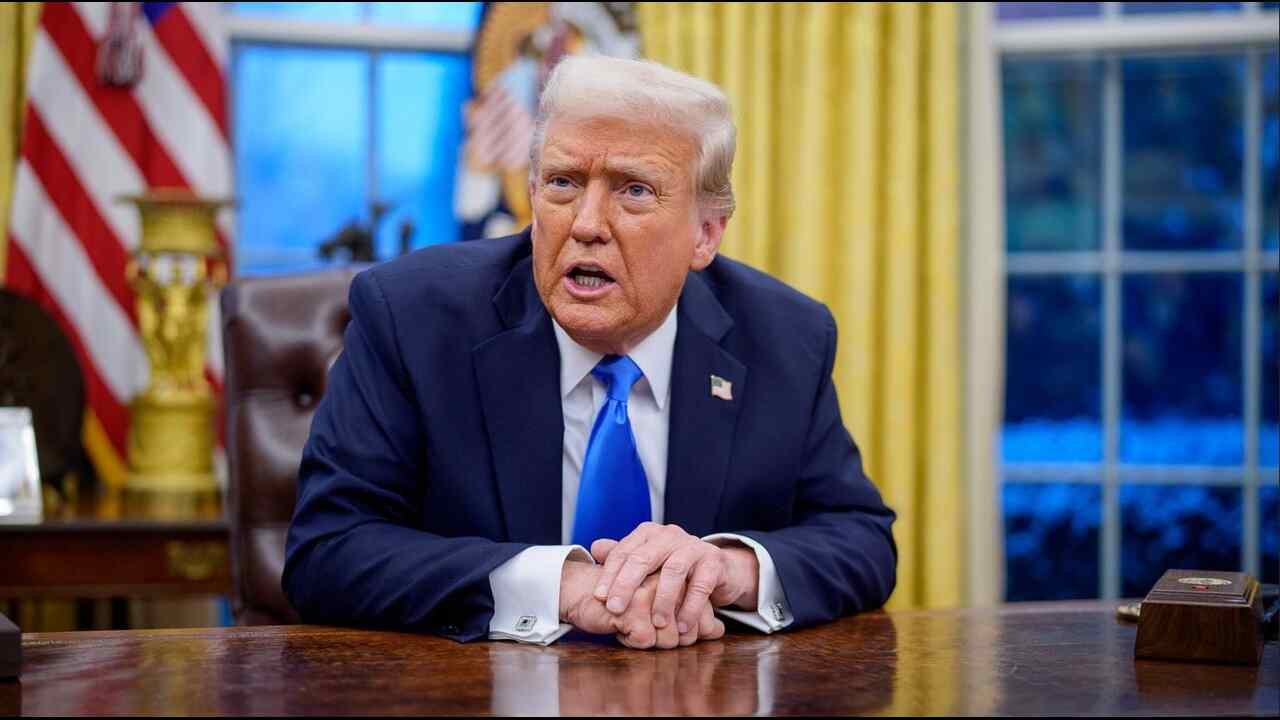
     

  • Trump’s Immigration Overhaul: H-1B Fee and the New ‘Gold Card’ Visa

    Trump’s Immigration Overhaul: H-1B Fee and the New ‘Gold Card’ Visa

    In a dramatic move that could reshape America’s immigration and technology landscape, US President Donald Trump has announced a $100,000 (approximately ₹88 lakh) fee for H-1B visa applicants. The decision, unveiled through a presidential proclamation, has sparked widespread debate, especially in India, where tens of thousands of professionals depend on H-1B visas to work in the United States.

    The proclamation marks one of Trump’s most aggressive steps yet in curbing what his administration calls an “abused visa system.” While the White House argues that the measure will ensure only “highly skilled” foreign workers enter the US, critics warn that it could choke innovation, hurt the tech sector, and disproportionately burden Indian applicants.

    Why Trump Raised the Stakes on H-1B Visas

    Explaining the rationale, President Trump emphasized that the decision was aimed at protecting American workers while still allowing the “best and brightest” to enter the country.

    “We need workers. We need great workers, and this pretty much ensures that’s what’s going to happen,” Trump said while signing the order.

    White House staff secretary Will Scharf echoed these sentiments, describing the H-1B program as one of the most abused visas in the system.

    “By raising the sponsorship fee to $100,000, we are ensuring that companies are serious about hiring foreign talent and that those they bring in cannot simply be replaced by American workers.”

    This substantial hike is not merely a deterrent—it is a statement of intent. Trump’s administration believes that companies will only be willing to pay such steep fees for candidates who are truly irreplaceable.

    What is the H-1B Visa?

    The H-1B visa is a temporary US work visa created in 1990, designed to let American companies hire foreign professionals in specialized fields such as science, technology, engineering, and mathematics (STEM).

    Key features of the program include:

    • Eligibility: Applicants must have at least a bachelor’s degree or equivalent in specialized areas.

    • Duration: The visa is initially valid for three years and can be extended up to six years.

    • Process: Candidates must register online with the US Citizenship and Immigration Services (USCIS). A lottery system selects applicants due to overwhelming demand.

    • Employment Terms: Once approved, H-1B holders are entitled to equal pay and working conditions comparable to American workers.

    While initially envisioned to fill critical labor shortages, the H-1B program has long been criticized by some policymakers who argue it is exploited by corporations to reduce costs and displace American talent.

    Indians: The Biggest Beneficiaries—and Now the Hardest Hit

    Indians have historically dominated H-1B visa allocations. In fact, government data shows that in 2024, 71% of all approved H-1B beneficiaries were from India, while China came second with just 11.7%.

    Big tech companies, many of which rely heavily on Indian talent, are among the largest H-1B sponsors. For instance:

    • Amazon and AWS received approval for over 12,000 H-1B visas in the first half of 2025.

    • Microsoft and Meta Platforms secured more than 5,000 approvals each.

    For Indian workers, however, Trump’s proclamation poses significant challenges. The $100,000 fee will be a recurring financial hurdle because:

    • H-1B visas must be renewed periodically if Green Card processing takes years, as it often does.

    • Each renewal would require paying the full fee again, pushing costs to potentially crores of rupees over time.

    The situation is further complicated by the long Green Card backlogs faced by Indian applicants. With waiting periods stretching into decades, many Indian professionals may find themselves trapped in a cycle of expensive renewals.

    Citizenship: A Higher Bar to Cross

    The Trump administration is also tightening the pathway to US citizenship. Reports indicate the revival of a more rigorous civics test—first implemented during Trump’s 2020 term and later scrapped by the Biden administration.

    Under the new plan, applicants must:

    • Study a pool of 128 questions covering US history and politics.

    • Correctly answer 12 out of 20 oral questions during their citizenship interview.

    This tougher process adds another layer of difficulty for immigrants hoping to secure permanent residency and eventual citizenship in the United States.

    Trump’s ‘Gold Card’ Visa: A Parallel Track for the Wealthy

    In a move seemingly designed to contrast with the costly H-1B program, Trump also unveiled a new ‘Gold Card’ visa program.

    Key highlights:

    • Fees: $1 million for individual applicants; $2 million for business applicants.

    • Objective: Attract “extraordinary people at the very top” who can create businesses and jobs in America.

    US Secretary of Commerce Howard Lutnick defended the plan by criticizing the existing employment-based green card system.

    “Historically, employment-based Green Cards brought in around 281,000 people a year, earning an average of just $66,000. Many were more likely to rely on government assistance. This was illogical. We were bringing in the bottom quartile. That stops now.”

    The Gold Card, in contrast, aims to raise billions in revenue while ensuring only the wealthiest and most accomplished foreigners gain entry.

    Industry Concerns: Innovation at Risk

    The business and tech communities have expressed concern over these developments. For decades, Silicon Valley has thrived on the influx of Indian engineers, scientists, and IT professionals who drive innovation and support America’s global competitiveness.

    Critics warn that:

    • Startups and mid-sized companies may be priced out of sponsoring foreign talent.

    • Indian professionals—especially younger ones—may seek opportunities in countries like Canada, Australia, and the UK, which have more immigration-friendly policies.

    • America’s edge in technology and research could weaken as talent pipelines shrink.

    For Indians, the costs and hurdles may significantly discourage applications, leaving many to explore alternatives closer to home or in other global markets.

    Conclusion: A New Era of Immigration Policy

    Trump’s latest immigration policies mark a fundamental shift in how the US values foreign talent. The $100,000 H-1B fee signals an era where only the wealthiest companies and the most indispensable professionals can realistically participate in the program. Meanwhile, the Gold Card initiative tilts immigration benefits toward the wealthy elite, sidelining middle-class skilled workers who once formed the backbone of America’s tech boom.

    For India, the implications are profound. As the country continues to supply the largest share of H-1B workers, this policy may not only disrupt thousands of careers but also reshape global tech ecosystems. With rising barriers in the US, more Indian professionals may turn their sights toward Europe, Canada, and Asia-Pacific hubs—changing the global balance of talent mobility.

    The message from Washington is clear: immigration is no longer a tool for filling skill gaps, but a privilege reserved for the few who can afford it.